
Last updated on August 7th, 2024 at 04:29 pm
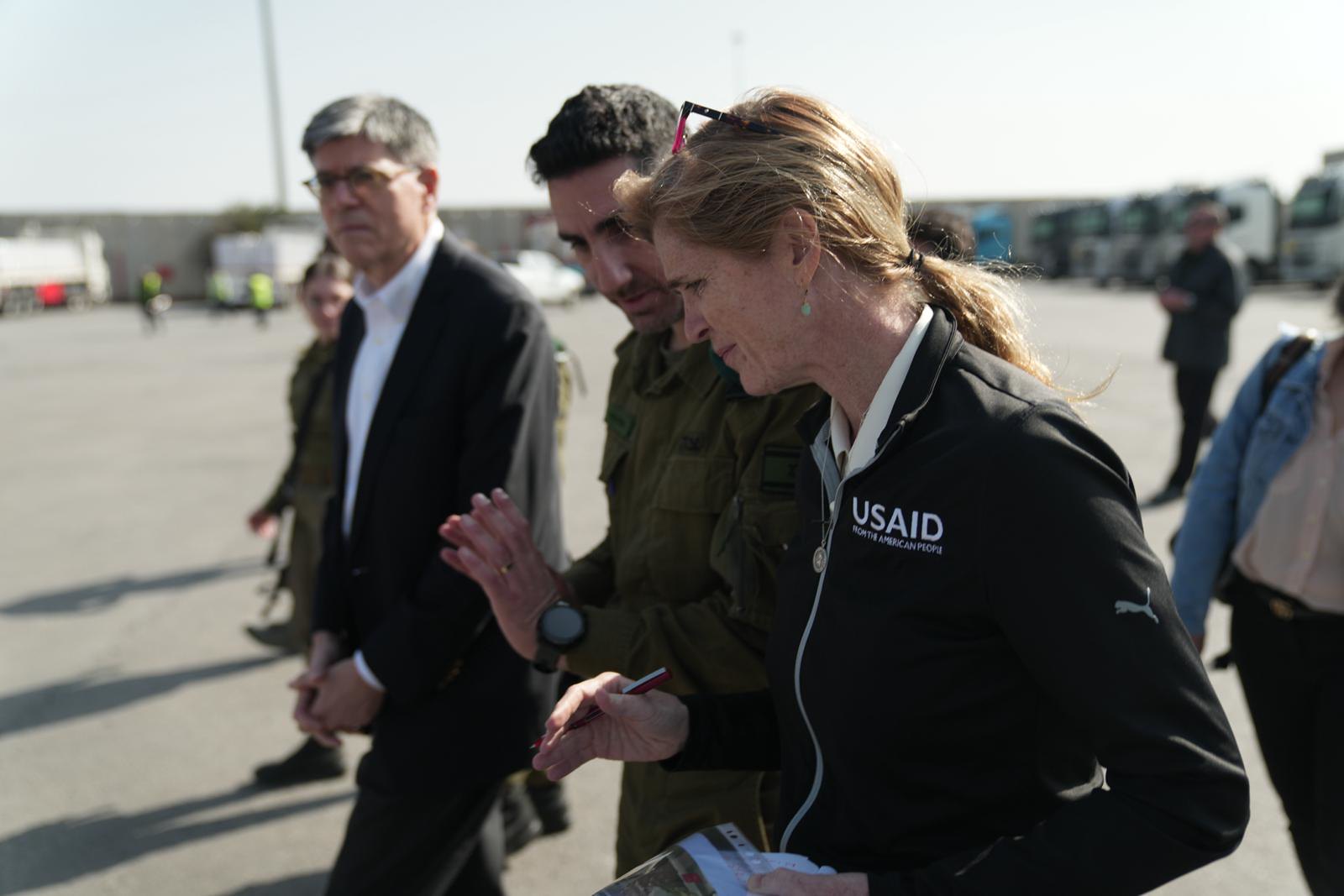
A state of famine has likely begun in northern areas of the Gaza Strip, according to US Agency for International Development (USAID) Administrator Samantha Power.
At a House Foreign Affairs Committee hearing on Wednesday, Rep. Joaquin Castro (D-TX) noted a recent USAID communication to the White House National Security Council (NSC) stating that not only is the Gaza Strip facing famine risk but that it “is already likely occurring” in some areas. Power said her agency’s warning was based on a March assessment conducted through the United Nation’s Integrated Food Security Phase Classification (IPC), a UN famine assessment metric.
When asked if she agreed with the March Gaza IPC assessment, Power said, “The methodology that the IPC used is one that we had our experts scrub, it’s one that’s relied upon in other settings, and that is their assessment, and we believe that assessment is credible.”
“So there’s—a famine is already occurring there?” Castro asked.
“That is—yes,” Power affirmed.
The latest Gaza IPC assessment states northern parts of the Gaza Strip are classified on the IPC’s acute food insecurity metric as being in Phase 5 or “Famine.” The March IPC assessment also states around 70 percent of the population in that area, or around 210,000 people, are classified by the IPC household-level food insecurity metric as being in Phase 5 or “Catastrophe”—a situation in which a given household “has an extreme lack of food even after full employment of coping strategies” and in which “starvation, death, destitution and extremely critical acute malnutrition levels are evident.”
The March IPC assessment states southern parts of the Gaza Strip are in Phase 4, or “Emergency” status, with a risk of famine through July.
The USAID administrator’s famine assessment comes more than six months on into the Israeli military campaign in the Gaza Strip, in which Israeli Prime Minister Benjamin Netanyahu has called for the total defeat of Hamas, and the freeing of hostages taken by Hamas militants on Oct. 7.
During her exchange with Castro, Power said Powers the rate of malnutrition in the Gaza Strip was “almost zero” prior to Oct. 7 but is now “one in three.”
“In terms of actual severe, acute malnutrition for [those under five years old], that rate was 16 percent in January and became 30 percent in February,” she added. “We’re awaiting the March numbers, but we expect it to get markedly worse.”
The Israeli military, known as the Israel Defense Forces (IDF) have restricted the flow of food, water, and medical supplies into the Gaza Strip since Oct. 7.
Power said around 500 commercial and humanitarian trucks would enter the territory daily before October. Those truckloads slowed in the early months of the war. Power said around 400 trucks had arrived daily in recent days, but said “we need to go way beyond that.” She said the destruction of the conflict has further degraded access to food in the Gaza Strip.
“The destruction of greeneries, and markets, and arable land, and then the fact that so few trucks got in over so many months means we have massive catch-up to do,” she added.
Aid distribution within the Gaza Strip has also seen setbacks.
An aid delivery in northern Gaza on Feb. 29 turned deadly as crowds gathered along the delivery route. Some reports have claimed Israeli forces near the delivery route fired on crowds waiting for the food supplies. Some reports have put the number killed in the Feb. 29 incident at over 100, with hundreds more injured.
Israeli military officials have admitted their troops and tanks were gathered near the delivery route, but said they only fired warning shots to disperse members of the crowd after they began surrounding and blocking delivery trucks, and said injuries and deaths among the crowd were primarily from people trampling one another or being run over. Axios reported at the time, citing an unidentified IDF official, that fewer than 10 Gazans were shot by Israeli troops, who aimed at their legs to disperse them. Area hospital directors, by contrast, told the Associated Press that dozens of patients came in after the Feb. 29 incident with gunshot wounds, including numerous wounds to people’s upper bodies.
Another aid delivery effort met with disaster on April 1, when Israeli aircraft repeatedly fired upon a humanitarian convoy operated by the World Central Kitchen, killing seven of the organization’s members. The aid organization had coordinated its aid delivery effort with the IDF prior to setting out. After an internal investigation, IDF officials concluded their aircraft operators believed they had observed an armed individual board the aid convoy partway through, but concluded there had not been sufficient evidence to warrant the repeated airstrikes. Two Israeli officers were relieved of their commands and three others were reprimanded following the deadly incident.
Concerns have also arisen around Hamas members diverting aid deliveries for their own benefit. Rep. Kathy Mannin (D-NC) raised those concerns during Power’s testimony on Wednesday.
Power said she would’ve expected Hamas to be a greater hindrance to humanitarian efforts, but said various international and humanitarian aid organizations have not reported that the designated terrorist organization is getting in the way of aid deliveries, nor has the Israeli military.
“I have been getting reports, in fact, that Hamas is targeting punishing or hindering Palestinians who are working with the International Community to provide humanitarian assistance,” Manning insisted. “You have not seen any evidence of that?”
“I would be very interested in those reports but that is not what our partners are reporting back to us,” Power replied.
Author

Discover more from FreeBase News
Subscribe to get the latest posts sent to your email.
