
Last updated on August 7th, 2024 at 04:29 pm
An Israeli military official has gone public with a theory that civilians injured and killed after an Israeli airstrike in the southern Gazan city of Rafah on Sunday were harmed by secondary explosions rather than direct injuries from the Israeli bomb.
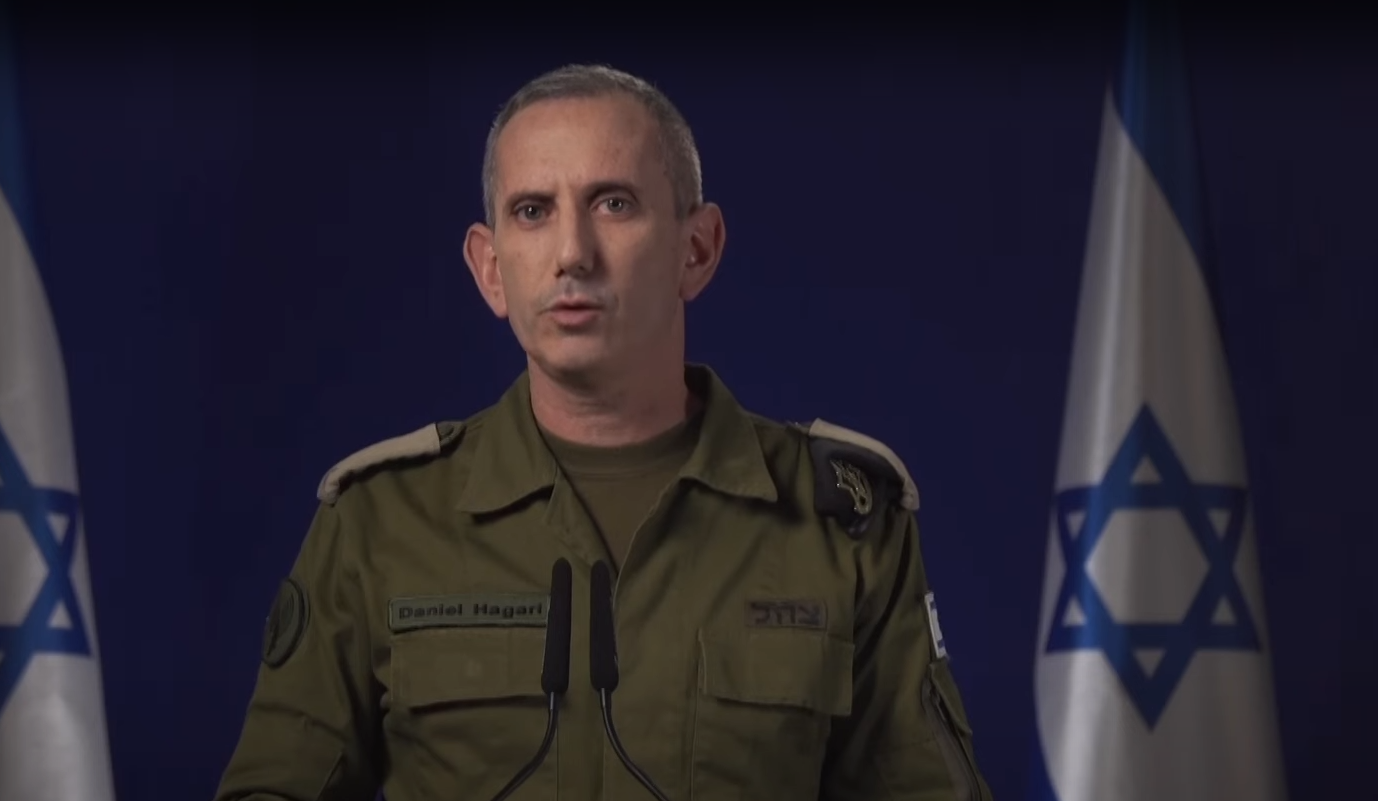
Addressing members of the press on Tuesday, May 28, Israeli military spokesman and Read Adml. Daniel Hagari reiterated the Israeli military’s claims it was targeting a pair of Hamas members during an airstrike on Sunday night in Rafah.
Multiple on-the-ground sources, including the Palestinian Red Crescent Society and the Gaza Health Ministry have said several other people, including women and children, were killed in the Sunday strike.
“Despite our immense efforts to avoid harming non-combatants, an incident occurred yesterday,” Israel Prime Minister Benjamin Netanyahu said of the incident on Monday.
In his Monday remarks, Netanyahu insisted that the Israeli military is thoroughly investigating the strike.
Addressing reporters on Tuesday, Hagari said the Israeli military is now considering the possibility that the initial Israeli airstrike set off a secondary explosion and that it is this secondary explosion that caused additional civilian injuries and deaths on Sunday.
At the Tuesday press briefing, Hagari presented a photo he said shows Hamas rocket launchers located 43 meters from the structure Israeli aircraft targeted on Sunday.

“We are also assessing footage, documented by Gazans on the night of the strike, posted on social media which appear to show secondary explosions, indicating that there may have been weapons in the area,” Hagari continued.
Hagari said Israeli signals intelligence officials intercepted phone calls that reinforce the Israeli military’s theory that the Sunday strike set off secondary blasts.
Hagari played an audio file the Israeli military said entails two Gazans discussing the Sunday strike. Proposed English captions for the Arabic audio conversation entail one individual telling another that the Israeli munition dropped on Sunday was relatively small but that it set off explosions at an ammunition warehouse. The exact source of this phone call could not be independently verified.
The Israeli military spokesman said the Israeli side is still investigating the blast and hasn’t reached a final conclusion. He said “even when” the Israeli side does reach a conclusion “it won’t make this situation any less tragic.”
Despite the outcome of the strike, the Israeli military spokesman claimed Israeli forces took several precautions in advance of the Sunday strike, including using “the smallest munition” compatible with the fighter jet that carried out the attack, and delaying the strike while they assessed the civilian presence in the area.
Hagari said there were only Hamas members located at the specific structure the Israeli forces targeted, and the Israeli military is now trying to understand what could’ve ignited a larger fire in the nearby compound where women and children were located.
The deadly blasts and fire in Rafah come just days after the International Court of Justice at the Hague, Netherlands, called on Israeli forces to immediately halt combat operations in the Rafah Governorate.
Netanyahu vowed in his Monday remarks, that Israeli forces would not “yield or surrender” in the ongoing fighting in the Gaza Strip. Netanyahu said he would not stop until he achieves his wartime goal of eliminating Hamas. He said that stopping now would allow Hamas to repeat the Oct. 7 attacks in Israel and would mean Israeli troops died in vain.
“If we surrender, we will not bring back all our hostages. If we surrender, we will deliver a great victory to terrorism, to Iran, and to the entire axis of evil—those who wish us dead,” Netanyahu said.
Correction: The original version of this article referred to the International Criminal Court (ICC) at the Hague, rather than the International Court of Justice (ICJ), which is also located at the Hague. This reference has been updated to reflect that it was the ICJ that called on Israel to halt military operations in Rafah, not the ICC.
Author

Discover more from FreeBase News
Subscribe to get the latest posts sent to your email.
