
Last updated on August 7th, 2024 at 04:28 pm
A United Nations Commission of Inquiry (COI) has concluded both Israel troops and Palestinian militants committed war crimes on Oct. 7 and thereafter, and that the “immense” scale of destruction from the ongoing Israeli campaign in the Gaza Strip is indicative of a crime against humanity.
The U.N. commission based its conclusions on reviews of open-source materials and witness accounts. The commission said it sought the Israeli government’s cooperation, but they refused and attempted to prevent some medical professionals and other potential witnesses from speaking with the commission.
The commission’s report specifically concluded members of Hamas, Palestinian Islamic Jihad, and Gazans of unknown affiliation “attacked distinct civilian targets in at least 24 localities, as well as public spaces and outdoor festivals” on Oct. 7, 2023. In total, the commission concluded some 809 civilians and 314 Israeli military personnel were killed in the Oct. 7 attack.
Oct. 7 Attack Findings
While military personnel might typically be considered lawful combatants, the commission said some Israeli soldiers “were visibly unarmed, wounded, hiding, captured and/or showing signs of having surrendered at the time of their abduction or killing.” The report states investigators found “reasonable grounds” to believe some Israeli soldiers were sufficiently incapacitated or unarmed as to be considered noncombatants warranting protected prisoner of war status under the laws of war rather than being attacked and killed. A supplemental report states some of these killings of unarmed soldiers were documented in footage taken by Palestinian militants during the attacks.
The report further concluded witness testimony, and the position and state of undress of certain victims’ bodies provided indications that the Oct. 7 attackers carried out “gender-based violence” and sexual violence. The commission said it reviewed testimonies obtained by journalists and the Israeli police concerning rape couldn’t independently verify those accounts, because Israeli authorities did not cooperate with the investigation and investigators did not have access to victims, witnesses, crime sites, and unedited accounts. The commission concluded some accounts to be false, inaccurate, or contradictory with other evidence or statements.
A supplemental report on the Oct. 7 attack states the U.N. commission notes “the absence of forensic evidence of sexual crimes committed” and states “witnesses who spoke to the Commission explained that Israeli authorities focused on identifying and burying the large number of bodies in the period following the attack, leading to evidence not being collected and preserved for accountability purposes.”
Potential Israeli Friendly Fire on Oct. 7
The U.N. commission investigated some allegations that Israeli forces fired on and killed their own civilians on Oct. 7. The commission concluded at least eight Israeli attack helicopters responded to various attack sites on Oct. 7, but the commission couldn’t be certain they shot at civilian targets. The commission did, however, gather a statement from an Israeli tank crew indicating it fired on a vehicle they suspected was carrying an abductee.
The commission also concluded Israeli tank fire likely killed “some or all of the 13 civilian hostages held in a house in Be’eri” and Israeli attack helicopter fire likely killed a woman being abducted from Nir Oz to Gaza by militants.
Gaza War Findings
In the fighting in the Gaza Strip since Oct. 7, the U.N. commission noted statements from Israeli government officials indicating broad authorization to strike civilian locations in the Gaza Strip.
“In many of these cases, the Commission could not identify military targets as the focus of the attacks,” the report states. “Even when military targets were allegedly present, attacks lacked distinction, proportionality and precautions, resulting in thousands killed and injured and widespread destruction of entire neighborhoods including in Jabalia, Al-Rimal, Al-Yarmouk and Al-Maghazi.”
The report further notes instances in which unarmed Palestinians and individuals waving white flags were shot by Israeli forces. In one case, the U.N. report directs to an Al-Jazeera broadcast purporting to show an Israeli soldier’s body camera footage in which Israeli soldiers discussed shooting an unarmed man waving his hands.
The report also notes an incident in which Israeli troops shot and killed three hostages taken by Palestinian militants on Oct. 7. The U.N. report states an Israeli military review eventually concluded the hostages were killed as a result of Israeli soldiers not adhering to the rules of engagement.
“The Commission considers that this and other incidents clearly indicate the permissive practice of shooting to kill without first ascertaining who the targets are and whether they pose a threat,” the U.N. report adds.
The U.N. commission also investigated claims of sexual and gender-based violence committed by Israeli forces on the Gazan population. The report linked to supplemental materials alleging Palestinians held in Israeli captivity since the fighting began have been forced to strip and remain naked for prolonged periods, as well as reports male detainees sustained physical abuse to their genitals by Israeli captors.
The report notes other accounts from Gazans, of men and women alike being forced to undress or forcibly stripped and being subjected to invasive searches as Israeli troops seized control over or ordered civilians out of certain areas of the Gaza Strip.
The U.N. report states some instances in which Palestinians held in Israeli captivity showed signs of duress as they were filmed confessing to witnessing or engaging in sexual violence or other potential war crimes on Oct. 7.
“In one of the videos the detainee is first seen blindfolded with his hands tied tightly behind his back. He is shaking when the blindfold is removed and he seems scared, disoriented and thirsty,” the report states. “His voice is hoarse, and he is seen drinking eagerly at the end of the video.”
The Scale of Destruction
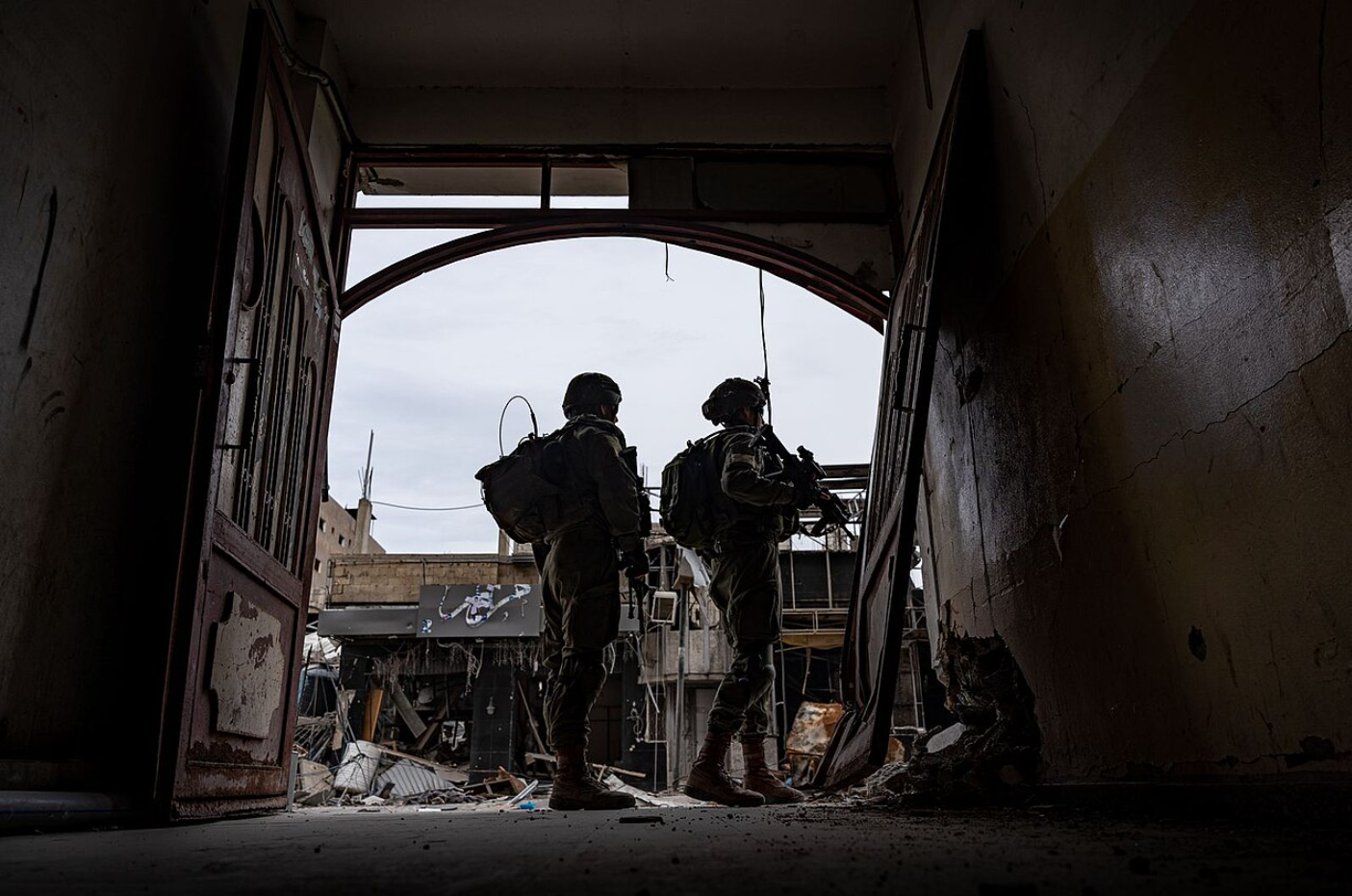
The U.N. report states that as of April, around 50 percent of the total structures in the Gaza Strip had been damaged or destroyed. The report notes that included in those damaged or destroyed buildings are around 84 percent of the health facilities in the Gaza Strip.
“The Commission reviewed photos and videos, showing the widespread destruction of residential complexes and entire neighbourhoods in the Gaza Strip, including agricultural lands, public facilities, religious and cultural sites, schools, universities and hospitals. While many of these locations were damaged or destroyed by direct or indirect airstrikes as well as tank and artillery shells, some were destroyed by bulldozers or controlled demolitions,” the report states.
While the commission noted the Israeli military deemed the controlled demolition of numerous buildings to be operationally necessary, the U.N. investigative team said the Israeli military “has not provided sufficient evidence of imminent threat, emanating from these demolished housing complexes, that would have significantly affected its troops.”
“In almost all cases, the [Israeli Security Forces] had the time and the ability to lay explosives without being fired on indicates there was no militant presence in or near them during the controlled demolition process,” the report continues. “[Israeli Security Forces] actions regarding demolitions therefore appear to be intended to cause wanton and deliberate destruction of civilian property, without necessity or military advantage.”
The commission concluded statements of Israeli officials, along with efforts targeting civilian homes and infrastructure, indicated intentional targeting of the Gazan civilian population. The committee further concluded Israeli forces have committed war crimes and crimes against humanity, and violated international humanitarian and human rights laws in the course of their campaign in the Gaza Strip.
Israel Denounces UN Commission
The Israeli Mission to the United Nations denounced the commission’s report on Wednesday as a biased work product “attacking Israel.”
In a Tuesday press statement, the Israel’s U.N. delegation accused the U.N. commission of attempting to justify the Hamas attacks in Israel on Oct. 7 and “contextualizing” the attacks ” through the lens of the Palestinian narrative.”
The Israeli delegation further accused the U.N. commission of attempting to draw “a false equivalence” between Israeli forces and Hamas militants as it relates to allegations of sexual violence.
“Israel rejects the abhorrent and immoral accusations leveled against the IDF, both with regards to the military operation in Gaza and its initial response against Hamas terrorists in Israel. Hamas is a lawless terrorist organization. Israel is a democratic country that is committed to the rule of law,” the Israeli statement continued. “The IDF conducts itself in line with international law, including [international humanitarian law], and has robust and independent mechanisms to monitor and investigate its actions.”
The Israeli delegation also accused the U.N. commission of disregarding an alleged Hamas strategy to use civilians as human shields, as it discussed the civilian casualties of the ongoing Gaza conflict.
The commission reports did acknowledge Israeli claims Hamas had used civilians as human shields and discouraged civilians from obeying Israeli evacuation warnings. The commission noted it had reasonable grounds to believe Hamas obstructed some Israeli efforts to evacuate civilians during the course of the war.
The commission report also addressed an Israeli military statement indicating civilians were killed in a Nov. 1 airstrike as Israeli forces attempted to kill a Hamas commander. The commission then notes the blast from that strike was consistent with a 2,000-pound bomb, and questioned whether such a weapon was consistent with an effort “to minimize civilian casualties in a densely populated neighbourhood.”
The commission report further noted Israeli claims that Hamas and other Palestinian militant organizations have operated from civilian infrastructure and relied on an extensive tunnel system running throughout the Gaza Strip. The commission said Palestinian groups that do operate from civilian structures indeed risk harming civilians, but asserted this would not absolve Israeli forces of a responsibility to choose weapons and methods of fighting that minimize the risk to civilians.
“Notwithstanding the militants’ actions, [Israeli Security Forces] must still select means and methods of warfare that minimize harm to civilians and civilian objects,” the committee report states. “This duty applies to all combatants irrespective of the opposing side’s conduct as, during armed conflict, adherence to international humanitarian law is not contingent on reciprocal compliance.”
Author

Discover more from FreeBase News
Subscribe to get the latest posts sent to your email.
